Showing posts with label media. Show all posts

Saturday, September 3, 2022

Coming And Going For The Week Ending 9/3/2022

Things that caught my eye this past week:

  • Dragon Award winner Declan Finn has Book 11 of his St. Tommy series up at Amazon, Barnes & Noble, and Kobo.
  • Imperium Press has no book news, so instead read their Substack to pass the time. "The Aesthetic Age" and "The Mithradates Strategy" are worth your time and shows that Imperium is not some disinterested Mammon Mobster doing this as a grift, but a committed fellow traveler working to get things thrown away back into common knowledge.
  • Chris Fox has a five-book fantasy series called "Shattered Gods". Book Four is now available on Amazon, and Book Five drops in December.
  • Antelope Hill has the audiobook version of Faith and Heritage: A Christian Nationalist Anthology at their store, along with print and ebook, here.
  • Richard Fox has Book Two of his Tyr trilogy for sale on Amazon in Kindle, Paperback, and Hardcover.
  • Nick Cole & Single White Medusa's "The Tolkien Project" has a new episode here.

Sunday, March 20, 2022

Signal Boost: "The Ancient Family" From Imperium Press

Imperium Press is a new publisher focusing on returning the Western Classics and other great works memory-holed by the Death Cult back into your hands. Their newest offering The Ancient Family, explained below.

The deepest and oldest layer of European religion is almost unknown today, and yet it governs all subsequent history. This is the Indo-European hearth cult, the subject of The Ancient Family. In this book we get a picture of the most traditionalist, nationalist, patriarchal religion imaginable, of a people gathered around a sacred fire, worshipping its ancestors, jealous of its gods, and sufficient unto itself.

Taken from books I–II of Fustel’s momentous work The Ancient City, this volume can be read as a constitution of the primordial family structure, the father of all that came after it. The Studies in Reaction series collects works that challenge modernity, and this family structure is the perfect antithesis of, and remedy for, all that ails us today.

There is precious little information of useful substance on how pre-Christian religion actually worked, and here is Imperium Press putting some of what there is out there for you to easily acquire and master. You'd be a fool to pass up this opportunity to learn from this, and see how this ancient structure readily integrated with Christianity once introduced. This structure works, doesn't require expense and complex technologies to become or maintain effectivness, doens't require complex social instruments (such as media complexes, phramaseutical regimes, or academic institutions), and is wholly self-sufficient so autarky is facilitated by this structure and Globohomo deliberately attacked by it.

This came up in a recent interview, embedded below, and it's worth a listen in own right.

And talked about more here.

You'll find Imperium's store listing here, where it's available in paperback for now, but you can also find it at Amazon for pre-order.

Tuesday, March 1, 2022

Signal Boost: Generation Y: The New Lost Generation

Author J.D. Cowan announces a new release.

And here's the description:

Generation Why?

There is an epidemic in the modern age: a crisis of meaning. Why is it the world we were promised back in the 1980s and 1990s seems so far away now? Whatever happened to those hopeful kids from back then? Whatever happened to Generation Y?

From authors Brian Niemeier (Don't Give Money to People Who Hate You), David V Stewart (The Keys to Prolific Creativity), and JD Cowan (The Pulp Mindset), comes this collection of essays about a lost generation trapped in a modernity they were never prepared for.

Read on and discover how Madison Avenue shenanigans, social instability, mindless progress, and general ineptitude, led an entire generation of people through the cracks--and how we can find them again.

Click on the image to get to the download page, where there are also the files needed to print your own hardcopy if you like. Click here for JD's blogpost on the release.

Tuesday, November 30, 2021

Signal Boost: Jon Mollison Appears "Red-Pilled Fiction Factory Podcast"

This is an hour well spent, and this podcast is worth throwing into your feed. Jon's appearance here is a fantastic one that drops a lot of knowledge in a short amount of time.

Monday, November 22, 2021

The Business: Why You Should Shun Offers of Adaptation From Hollywood

Author David Stewart lays out why Hollywood--and this includes its junior leagues in Canada, the UK, the EU, etc.--is no place for an author to take his property.

I would add a caveat here: "If you remain an active party with shot-calling power, this can work for you." This is how we got Peter Jackson's adaptations, despite the known provenance of the legal rights permitting that in the first place. Now that Christopher Tolkien is dead, the Estate's new management gives no fucks and thus allows this defiling to occur. JK Rowling's involvement with the film adaptations of the Potter series is well-known, and likely why they are as good as they got. The instant George Lucas sold his babies, you saw what happened to them.

I also add that we should not presume this to be absent in other film/TV markets. There is no evidence that Bollywood, Japan, Hong Kong, Russia, etc. are not likewise driven by these same problems as they too have the issues of high risk recquiring high reward to pay off and thus are likewise incentivized to go for the safest bets they can manage. That they're not yet afflicted terminally with the Death Cult dogma is a benefit, but there is other baggage to deal with that can easily equal that wickedness.

The difference here is that the Hellmouth increasingly cannot be negotiated with on these matters, whereas rising competitors can be negotiated with in your favor. For now, for as long as it lasts, those competitors should be considered as more viable options than Hollywood if you want to see your books adapted into film or TV and even then don't be like Martin and take the deal before you finish the series.

Thursday, November 18, 2021

The Business: Kindle Vella, I'm Not Impressed

Oh look, Amazon cut a video pitching Vella.

I am not impressed.

I see nothing here that I cannot do with a properly structured Patreon account (or something like it), and I can add more value with something like Patreon for serialized stories that Vella does not offer. In addition, I can still collect the chapters together and publish it on Amazon as a stand-alone novel. I retain a commercially-viable presence outside of Amazon--a matter of increasing importance as Amazon's dominance grows--and I am immune to Amazon executing any legal schenanigans down the road.

All that Vella has to offer is incorporation into the Amazon infrastructure. I sense that the Vella team realizes that it is their biggest strength, so I expect them to lean hard on that in the future, but for now there is not enough there to make me want to further incorporate myself into the Borg that is Amazon. Not when I forsee that future conditions to be ones that favor author diversifying their offerings away from Amazon due to breakups in the global nature of the Internet (e.g. Russia changing its tech laws to favor Russian operations over foreign ones across the board, making it easier to sell books there via a Russian competitor to Amazon).

If you think I'm wrong, sell me on Vella.

Monday, June 21, 2021

My Life As A Writer: Final Fantasy XIV: A Narrative Reborn (Part One)

Introduction

I maintain that most game designers, developers, and publishers are incompetent at narrative and storycraft. They should not, as a rule, attempt to mix narrative and gameplay because they are so enthralled with the former that they forget what business they are in and then they get indignant at being called to account for their incompetence and waste of time and resources.

Likewise, I maintain that authors and writers should not deal in game design. The two disciplines are significantly different and require not only dissonant mindsets but also do not engage the same skillsets, and when you have authors meddle with game design you get misses more than you get hits- and yes, that often includes famous examples such as Gullimore del Toro's involvement (however minor) with Death Stranding.

"Often" is not "Always", and there are examples of narratives incorporated into games that actually accomplish the goal of establishing a synergy between the two. The Final Fantasy franchise is often brought up, correctly, in listing those exceptions to the rule and the second MMORPG in the franchise--Final Fantasy XIV ("FF14" hence)--is one such example of success.

As the subtitle implies, this series focuses on the narrative in the initial relaunch of the game, version 2.0 and its later patches, subtitled "A Realm Reborn" ("ARR" henceforth). I will not address the original game, save as it relates to the subject at hand, and the same will apply to the expansions. Expansions will get their own series in the future. This is also not going to focus on the lore; there are plenty of videos on YouTube that go deep into the lore of the game. This series is about storycraft foremost; lore will be addressed only as it applies to storycraft.

There is no spoiler protection. Even Shadowbringers is past the protection date now, so it's all fair game until Endwalker releases later this year, at which time I will observe spoiler protection solely for Endwalker until this time next year. This is your warning.

Finally, this is a parallel to the gameplay-focused review on my main blog; if that's what you're after, you want to go here instead.

What Failed Before

Thursday, May 20, 2021

Kentaro Miura, Creator of "Berserk", Dead At 54 & Why You Should Have Posthumous Plans For Your Work

If you're a regular here, then you already heard the news. If not, let me catch you up.

And if you don't read Japanese, then Dark Horse has you.

That's the start of a tribute thread by Dark Horse. Pursue as your leisure. Fans across the world in multiple places, across all media, have their own grieving rituals.

In typical custom, this news was kept under wraps for a time so that family may grieve in private before the official announcement. It is, as of this post, unknown what will become of Berserk as it is now unfinished. This has not gone unnoticed, and colleages of Mr. Miura have been implored to check in on their own health and make plans for postumous publication in the case of unfinished work.

Translated: Vinland Saga manga creator Makoto Yukimura wrote: "I just learned about Kentaro Miura's death. At the same time, my fans are tweeting about my health. Thank you very much. I will take care of my health and will surely complete the Vinland Saga series. I'm very shocked. I can't put it into words. It was a tremendous job. I think drawing was his life."

This is not an uncommon concern. The creator of Hunter X Hunter, Yoshihiro Togashi, has had similar concerns said of him as his audience doesn't want to see what has now befallen Miura's audience--and Ken Ishikawa of Getter Robo before him--happen unto him. George R.R. Martin has had such conversations, wanted or not- especially after fellow author Robert Jorden's death left The Wheel of Time unfinished.

And I can confirm that question I've had that put to me, and not just today.

This being a blog about writing and the business thereof, I think you can see where I am going here.

Yes, I do think that plans should be drawn up regarding what happens to one's intellectual property after one dies. If it is decided to finish any unfinished projects after death, then resources should be secured and a successor hand-picked and read-in before the fact so they can seamlessly take over if you are disabled or dead. It is uncommonly done because few authors--whatever the medium--ever reach a position where that is actually a practical concern.

This is no longer something that should be left for others to decide. Authors should presume, for these purposes, that their creations are valuable and therefore should make the necessary moves to protect it after they are gone. It does not matter if they are now or not; the future is uncertain, and more than a few authors' works didn't achieve any fame, popularity, or respect until well after the fact. Ceading control to someone with little or no incentive to heed your vision and protect it is how you end up with heirs selling birthrights for pennies or worse, and the resulting defilement that follows.

We do not know what will become of Berserk. It is entirely possible that it will be left fallow for a time, only to later get a new anime adaptation that fills in gaps--this was the case for the unfinished Getter Robo Arc--and that may not receive the desired positive reception. These decisions should be made by you while you live, and not left to others who may not care about them whatsover. It is a necessary part of the business, and too few of us are prepared for this. That has to be fixed, now.

Saturday, May 15, 2021

The Business: Upstream Reviews, For Indie Readers By Indie Authors

Add this to your regular blog rolls, RSS feeds, or trips around the Internet if you're a regular reader of science fiction, fantasy, or horror: Upstream Reviews, brought to you by veteran authors Rob Krose and Declann Finn.

Welcome to Upstream Reviews, where we know that culture is upstream from politics, and we act on it.

In recent years, you may have heard from mainstream thinking that there is no such thing as a “conservative creative.” The idea is that no one makes entertainment unless they’re left-leaning, to the left of chairman Mao.

Usually, this claim is made by those people who refuse to look at fiction, because “fiction is irrelevant.” Then they go out and try to sell their own product.

At Upstream Reviews, we will go out of our way to bring you the best in Conservative entertainment. And only the best.

Because we’ve made our own platform, and we’re not going anywhere.

Our review philosophy is simple: no pandering leftwing garbage.

If we review a book, it’s because we think it’s worth reading. And we prioritize books and authors that go against the culture tide of relativism, cynicism, where Leftists rewrite storytelling to fit their own image. If there’s politics in it, we will discuss them. If there’s no blatant politics, we’ll explain why the book alone fits in with the rest of the right / right-leaning works.

On very rare occasions, we may review a book because it is so vile it needs a stake rammed through its heart like the abomination it truly is.

You can read "Conservative" as "Not pozzed by the Death Cult or run by its SJW shocktroopers" because that's typical of what Upstream features in its posts.

Upstream does two things as regular features: Classic titles being featured (as of this post, the most recent is "The Lathe of Heaven" by Ursula K. LeGuin), and independent or small press titles that aren't getting attention from the SJWs that dominate BookTube/BookTwitter and other mainstream social media or bookstore marketing (as of this post, the most recent is "Fatemarked" by David Estes). There are weekly roundups on Sundays, and the occassional non-fiction work gets attention when it's appropriate, but it's those regular features that you'll be coming back for.

Do I recommend it? As part of your larger set of media feeds to keep you up to date on what's out there and what's the best of what came before, it certainly is, especially if you're budget-concious and prefer to read digitally. Check it out.

Sunday, May 2, 2021

The Business of Writing Talks Blockchain & NFTs

Joe Salari of "The Business of Writing" brought Kate Baucherel on to discuss how Blockchain may impact authors. They cover NFTs, crypto, and how other technologies tied to the blockchain may change indie publishing.

Ultimately, I think the impact will be less than a lot of enthusiasts would like and not in the favor they would rather it take.

The current benefit for indie writing and publishing is that is actually pretty simple to do, both in the writing and the business end of things, such that one man can handle it all himself without being an expert in more than writing, keeping up with effective promotion, and handling one's personal finances. All things blockchain greatly increase the level of complexity involved, and doing so to people generally disinclined to be IT experts.

Conditions--political, financial, technical--would have to change radically for any of this to go in the enthusiasts' favor, especially as more and more drawbacks to a digital-only economy get exposed and exploited to screw over the common man with the consequence of shifting commoners back to favoring physical media and hard currency transactions for their affairs.

Right now, it's a shiny widget--a toy--and nothing more. Until it finds a useful, practical, everyday use-case of application that normies can comprehend and employ it might as well be Faster Than Light travel or full-body cyborgs. We're not there. We're not even close. We are unlikely to get there before those threatened by this set of technology either turn it to their favor or shut it down. Favor that which adheres to the KISS principle instead.

Wednesday, April 21, 2021

The Business: Arkhaven Launches Webtoons Mobile App

Arkhaven Comics announced today via Bounding Into Comics that they've launched a competitor to the popular Webtoons comic publishing mobile application: Arktoons.

Vox Day and Arkhaven Comics announced a brand new initiative, Arktoons, that will be an alternative and competitor to the wildly popular Webtoons platform.

Arktoons is described as a “digital comics site featuring vertically-displayed comics panels in the Webtoons style that is particularly well-suited for reading on smartphones and tablets.”

The user will not be required to pay to access it. Subscriptions will be available to support specific creators, using a model heretofore put into place--successfully--with Unauthorized, the video streaming site that Vox Day put together; benefits are not specified at this time, but I would not be surprised if this also would allow access to Social Galactic (his social media site) the same way that Unauthorized subscribers do.

Okay, that's nice and all, but I have to ask: why would Webtoons readers leave that?

There is a massive amount of comics content on Webtoons, far more than could be exhausted. Arktoons is swimming against the Network Effect here, and exclusivity is insufficient a draw for people; much like Gab, Bitchute, et. al. merely being a rival network-dependent technology competing against the dominant player is a massive black mark against it. It does not help at all that it is aligned with politics that are openly attacked and suppressed by the dominant players across the West. (In the East, merely not being either the top dog or not state-sponsored is detrimental enough.)

This is not where the action is. The value of Webtoons is in the massive size of its user traffic. That's why they can get away with being not at top-end graphical fidelity; they're aiming at young normies with phones that get replaced every year or two, and normies never go out of their way for a damned thing. Making a rival app means telling normies about it, and if they don't balk at not being on Webtoons at all, they usually balk at who's behind it. In short, this is a massively hard sell and Vox isn't making it any easier by being out front.

Network Effect businesses are not nearly as open to competition as people would want there to be. We'll soon see if Arkhaven has the savvy to surmount the big challenge before it.

Friday, April 16, 2021

Follow Up: Jon del Arroz on Kindle Vella

I mentioned this the other day. Jon del Arroz addresses Amazon's new Kindle Vella initiative below, nice and simple.

I am interested in this, but I am also cautious enough to let someone else take the first wave to the beach. Over in Jon's Discord server we have folks digging into this, as Derek Murphy did, and that's how we're getting the details that Amazon's PR isn't talking about.

So far it is looking like it's worth trying, so I and several others are looking at backlog material that would work in this serial format. Once we see it in action, we'll be able to report back on actual viability.

Wednesday, March 17, 2021

The Business: Business of Writing Podcast Talks BookBrush

Quote: "Kathleen Sweeney from Bookbrush shows us how to use the latest features to make animations and book trailers in minutes. Creating professional book marketing materials has never been easier. Capture the eye of a potential reader then help them discover you as the next author they need to read."

This episode is more on the marketing end of the publishing business, and it aimed squarely at Indies like myself and many of my peers. With each development of tools like this, it becomes easier to compete at a level of presentation that normies are long-accostumed to thanks to OldPub's practices, and not only to meet those expectations but to surpass them.

The interface reminds me of those used for Print On Demand merchandise companies like Teespring or Redbubble, so it would not surprise you to see that this has a free account level with paid premium options. The sites' features aim to address an indie author's needs for print, ebook, and audiobook marketing. This includes boxed sets and trailers. This is the game-changer that they claim it is, as it means that--again--the indie author can do more for himself and do so in the manner that gets, keeps, and closes sales with the vast sea of normies that make up your prospective buyers.

It's no surprise that BookBrush is pushing their presence by doing podcast appearances like this; they stand to benefit by getting the word out and showing prospective clients how they solve very real problems that indie authors have. This may not be enough for you, but I bet you know someone for whom this will do the job, and I also bet that you'll find more than a few publishers using this site to streamline their marketing workflow. Even if you opt against using it, it doesn't hurt to be familiar with it.

This episode is about 40 minutes long, so it's doable over a long lunch or a lengthy commute. Good luck out there.

Sunday, March 14, 2021

The Business: #20Booksto50K Talking Covers With Jeff Brown

Craig Martel & Michael Anderle of #20Booksto50K interview cover artist Jeff Brown the other day. If you're getting into this business, either as a prospective client or as an artist, this is worth your time.

Jeff is not a cheap artist. He makes it clear with his price signals that he recognizes both the value of his skill and that of his time, but he's also not a wanker that pulls up the ladder behind him because he's using some of that time to pass on what he learned to those coming after him. That's not just a class act. That's how you build and sustain a body of practical knowledge across generations.

Buried within this conversation is a key takeaway for new folks: the cover is about prospective buyers. It's not for the audience; they're invested already. It's not for the writer, editor, or publisher either. It's purely about sales, and sales means appealing to your targeted buyers as best you can. This is its own problem to solve, as author and cover artist David Stewart explained this past week at his YouTube channel, which is why knowing whom the cover is for matters.

You can make that cover that maximizes appeal to prospects and still do whatever, but the former trumps the latter every single time. All that matters is that the prospect sees what he's looking for on your cover at a glance. No hiding shit in small print, no too-busy covers, none of that. Go study successful book covers, movie posters, etc. if you have to look at a thing to learn how to do it; it's how I came up with my Must Haves for Star Knight covers.

Yes, you still have to do your part if you're the writer and not the cover artist in this arrangement, but the cover makes certain that maximum eyeballs get on your work. That's why this is worth your time. Any additional insights? Put them in the Comments.

Tuesday, February 2, 2021

The Business: Cirsova Kickstarter Scrapped, Goes Straight To Pre-Orders

Quoting from the source:

I’ve decided that rather than flog the Kickstarter for another week and a day, I would redirect all of my efforts towards ensuring that all versions of the Spring issue are available and up to snuff and getting all of my other projects lined up.

Right now, only the eBook version is available for pre-order, but as soon as all of the files process, we’ll be sure to let everyone know where and how to get your hands on the Spring issue.

It wasn't going to make it, so rather than throw good after bad Cirsova cut the lines and moved on with the process. As quoted, the issue in question is available for pre-order; click on the image below to get to the Amazon sales page.

Tuesday, January 12, 2021

Signal Boost: Cirsova 5th Anniversary Issue

The fine folks behind Cirsova Magazine have a crowdfunding campaign up at Kickstarter for their 5th anniversary issue.

$5 gets you a digital copy, and $12 gets you a paperback with your choice of cover (see the Perks on the page), so this is a great deal.

If you like this, and you want to give them more money (and collect back issues), you can find them all as well as your purchasing options at Cirsova's site.

Tuesday, January 5, 2021

The Business: Google Fixes Discovery Against Indie Creators

The leading Hispanic voice in Science Fiction, Jon del Arroz, cut a video about Google's latest shitbaggery.

Cernovich is right here. Just over 10 years ago, blogging was a very different scene. You were able to be discovered organically, so long as you could focus on a specific niche; the path to success was narrowly-focused topic-based blog publishing, taking the concepts a newsletter and a daily column and merging them together into a coherent online entity.

Amazon, Facebook, et. al. have done the same thing to their algorythms. All of them fixed their systems to become Pay To Win that favored big corporate interests that were willing and able to pay to win. This forces independents back to older forms of promotion and organizing, as Cole & Anspach did by putting up a dedicated Galaxy's Edge site with a storefront, and others do with resuming a dedicated newsletter list.

It works. Once your revenue permits such a thing, do it. Embed your blog there and link to it on the front (landing) page. Be your indie thing books, art, games, whatever you can no longer rely on Big Tech to permit organic discovery. You have to aggressively promote yourself, and that means learning the ways of marketing and sales.

Yeah, I don't like either. Has to be done. Embrace the suck.

Wednesday, November 11, 2020

On The Importance Of Studying Historical Wars

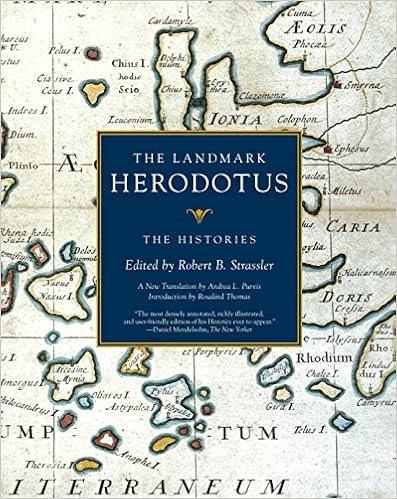
The wars of the past have had impact reverberating down the ages to the present. Patterns of behavior we see today went along then, and that is one of the reasons everyone ought to be familiar with the great men and events of days long past. You can get off to a good start with a well-annotated edition of Classical history, and this edition of Herodotus' Histories (and the two companions suggested to go with it) are good places to start- including if you are a father teaching your children at home.

Especially if you are a father educating your children at home.

Connecting these ancient events to more recent echoes is a thing for another post; suffice here to say that the Athenian expansion into Syracuse and the Persian incursions into Greece are good places to start. (On a related note, do take the time to ensure that your child doesn't mistake Frank Millar/Zack Snyder's 300 for the real events.) As these are meant to hold up over time, and given that the events covered are long gone, if you do your part to take care of these books then you'll be teaching your great-grandchildren with them 50-75 years later.

The entire period that began with Persia's two big invasions of Greece and ended with Alexander's sacking of Persia describes a sequence of events whereby one imperial power, in its hubris, underestimated the resilience of the nation it targetted for conquest. That pair of failed invasions would then lead to the two leading cities each succumbing to the same curse in turn, before a heretofore ignored backwater rose to power, conquered and unified Greece before enacting revenge upon Persia and destroying that empire before itself overextending and collapsing.

That's a pattern that's played out more than once since. (Specific examples I leave to readers to discuss.) These are patterns manifest by means of war, war conducted up close and person by men stabbng and slicing each other to death while avoiding getting smashed by boulders or trampled by beasts. Only recently did we extend that hellscape to include firearms, cannons, and air-dropped bombs. Those men that survived would come home and pass on what they learned--and earned--to their sons, making them ready for when war came yet again.

It is one thing to honor our own veterans. It is another to forget what put them in the field, and by connecting the chains from past to present we can detect the patterns behind them (as well as the men that use them to their benefit and the detriment of common men) so we may forecast the future with reasonable accuracy- and decide what to do accordingly. That this is not done in our schools, save for those in the elite--and to the end, as we learn, of exploiting we common men--is unacceptable; we cannot rely on enemies within to do good for us, so we must--as we did before--do for ourselves.

Sunday, November 8, 2020

Star Knight Lore: The Goblin

Goblin

General & Technical Data

Model Number: REA-01
Code Name: Goblin
Unit Type: Combat GERWALK Unit
Manufacturer: Red Eyes Armada
Operator: Red Eyes Armada
Rollout: AD 3000
First Deployment: AD 3000
Accommodation: Pilot only in torso cockpit.
Dimensions: Overall Height 10 meters w/ legs extended; Width: 3 meters
Weight: 20 metric tons (30 tons loaded)
Armor Materials: Composite of scavenged materials.
Powerplant: Cold fusion
Propulsion: Rocket Thrusters w/ verniers (legs and torso)
Performance: Turn (180), 2.2 seconds; Run (land): 200 Kph (125 Mph); Flight (atmosphere): 800 Kph (500 Mph) w/ 8Km (5 mile) ceiling
Equipment & Design Features: Sensors, range 4000 meters; extendable manipulator arms for cargo/asteroid; tri-screen cockpit.
Fixed Armaments: Torso-mounted paired blaster cannons. (Optional) Missile pods on side hardpoints on the torso.
Technical & Historical Notes

The Goblin class of GERWALK-style combat units represents the first original mecha manufactured by the space pirate Red Eyes. It marked the point where he acted on his pretentious ambitions of conquering the Milky Way galaxy, as heretofore the pirates used only mecha stolen from other parties and adapted for their use in piracy.

Observers in the domains afflicted by them report that they took the deployment of the Goblin as a sign that things had turned for the worse. This is not because the Goblin is a potent unit--it is a simple, cheap, and easy design to produce--but rather that demonstrating the power to design and produce their own mecha turned a desperate pirate band into a hostile power to contend with.

The Goblin fits into the most basic class of mecha: a pair of legs mated to a box with a cockpit, engine, and some additional thrusters. As a GERWALK-style design, it is easily able to handle unsteady terrain, but it lacks the ability to fold back the legs and thus has no Flight Mode. It cannot withstand atmospheric re-entry, but it has flown inside an atmosphere- though not at great speed. Hardpoints on the box's sides, where one would expect arm servos to attach, are usually used to mount external missile pods for additional firepower. The manipulator arms are kept retracted until the time to grab booty from a target arrives. The set of sensor eyes light up red, as one would expect of any Red Eyes Armada mecha.

While most Goblins are deployed in squadron-level strength or less from attacking pirate raiders, full wings of them were seen during their first year of deployment when a House Far flotilla engaged a Red Eyes operational base built from a handful of asteroids linked together with stolen colony construction gear. One was the resident garrison force, and two more came from a pair of half-refit stolen carrier vessels moored there. Despite horrific losses, the numbers compelled the Far flotilla to withdraw. When the Far warships returned, the pirates had since abandoned the base and fled the area.

By the end of the year, a captured Goblin arrived at House Kawamori's factory fortress at New Osaka. The forensic team quickly deduced the genius of the design, as they found the controls and user interface to be intended for pilots who could not read and had no formal education- the sorts that made up the masses of pirate crews across the galaxy. Duke Kawamori presented the team's findings just before Christmas at the Court of Stars on Earth, implicitly endorsing the argument that the Red Eyes pirates were a truly significant threat to galactic order.

The presence of an original pirate mecha design is distressing enough. That is is manufactured in great numbers makes this even worse of a development, as it means both that Red Eyes acquired industry capacity somewhere as well as a recruitment capacity to put flesh and blood at the controls- men loyal to the notorious pirate. Various experts on the matter speculate that it is now only a matter of time before more advanced designs appear.

In January of 3001, that time arrived. A higher-quality variant, dubbed Hobgoblin, debuted at the Taking of Gabriela Robin, the massive pirate raid upon House Ireton's seat of New Edinburgh in the Dire March- the incident that chroniclers now agree is the inciting incident marking the beginning of the Matter of the Milky Way.

Friday, September 1, 2017

The Craft: Characters Are Tools. Handle Them Accordingly.

Over at the main blog, I posted a follow-on to Razorfist's last video for Mad Max Month. I hit upon my chief objection, which is that George Millar lied to me. He sold a Mad Max story, where the story itself just had Max in its as some extraneous character that has no justification for being there at all (in narrative terms). This is a tell of fan fiction.

And, as much as folks want to believe otherwise, "fan fiction" is synonymous with "bad writing" for a reason. One of them is the insertion of characters that cannot justify their presence in the story's narrative, and that's what happened here.

Writing is a craft because there are such things as Best Practices. It is a body of knowledge that accumulates over time, can be learned, can be mastered, and improved upon by those masters. Best Practices arise through the repeated trials, errors, and successes that previous generations attempt and observe. They are passed on because they reliably, repeatedly, work; you might as well argue that gravity isn't real.

Which means that characters are tools, just like every other element of the writing craft, and as such you use only those characters that are required to execute the narrative properly. Surplus elements get the chop. Editing identify them, and revision culls them. Your characters are there to do things, and once their job is done you need to hustle them off the stage because they have no further authorization to be present in the narrative. You know this is true because you've seen, first-hand, what it looks like when a story doesn't do this.

That's why editors are are useful. Engage one if you are able to do so. Brian Niemeier's post today at Kairos addresses this very matter. Listen to them, learn from them; one of the most reliable ways to improve your craft is to heed your editor's reasons for revision. If you want to do more than dabble--if you want your writing to pay bills--then heed this and master your craft. Cut the fat, and that includes characters you do not need, and prosper.