Showing posts with label narrative. Show all posts

Tuesday, March 1, 2022

Signal Boost: Generation Y: The New Lost Generation

Author J.D. Cowan announces a new release.

And here's the description:

Generation Why?

There is an epidemic in the modern age: a crisis of meaning. Why is it the world we were promised back in the 1980s and 1990s seems so far away now? Whatever happened to those hopeful kids from back then? Whatever happened to Generation Y?

From authors Brian Niemeier (Don't Give Money to People Who Hate You), David V Stewart (The Keys to Prolific Creativity), and JD Cowan (The Pulp Mindset), comes this collection of essays about a lost generation trapped in a modernity they were never prepared for.

Read on and discover how Madison Avenue shenanigans, social instability, mindless progress, and general ineptitude, led an entire generation of people through the cracks--and how we can find them again.

Click on the image to get to the download page, where there are also the files needed to print your own hardcopy if you like. Click here for JD's blogpost on the release.

Thursday, June 24, 2021

My Life As A Writer: Final Fantasy XIV: A Narrative Reborn (Part Four)

Hubris Leads To Downfall

There is a dramatic reversal of fortune, but because a MMORPG cannot allow for the player to make the wrong choice this agency is instead rendered to a supporting character. In this case, the reversal comes from the boy wonder Alphinaud Levelleur. His smug face though ARR, and his too-confident attitude that he knows it all even alienates his twin sister Alisaie early on, acted to forshadow this.

The climax of ARR's launch content is a pair of dungeons where the Warrior of Light leads a commando team against the Garlean Empire's two key installations in Eorzea, places where Ultima Weapon--a reawakened Allagan Primal-eating mecha--is repaired at and (respectively) deployed from. All of the Garlean antagonists are defeated by the end of this arc, and the reborn Eorzean Alliance celebrates victory.

In a more concise narrative, this would be it and the protagonist would move on to his next adventure--i.e. to the Heavensward (HW) expansion--but extra-narrative issues delayed that. Making a virtue of necessity, the narrative team used the intervening patch cycles to play out the logical consequences of tensions and attitudes already expressed during the 2.0 story.

In short, we have a filler arc.

Rather than come up with a sidestory that had no lasting consequences, the FF14 team decided to use this to make a stronger narrative bind between ARR and HW. The means was the act of hubris that manifested as Alphinaud's decision to raise a private standing army with no loyalties to any extant government, but instead to be the military adjunct to the Scions. This was the Crystal Braves Grand Company.

This was a very good display of competent storycraft on the part of the writers. They ensured that the downfall to follow was properly grounded beforehand; it was well-known that Ul'dah was riven with corruption, that the Monetarists were little more than gangsters with good publicity, and others regarded the Scions as a nuisance if not a threat. Forming the Grand Company was the act that forced these hostile parties to act against the Scions, and therefore against the protagonist.

This "filler arc" had the protagonist not only deal with unraveling a hostile spy network tied to the Garlean Empire, itself foreshadowing the reveal of there being such a network in action, but also had two apparently disparate narrative threads woven together. One was the Shiva thread regarding Ishgard, setting up the transition to the next expansion in one direction, while the corruption thread out of Ul'dah pushed it from the other; the latter supplying the former with resources being the hidden connection.

The climax comes with the apparent defeat of the Shiva threat to Ishgard, when the protagonist comes to Ul'dah to meet with the embattled Sultana only to be framed for her murder in a most farcical manner. The betrayal by the Crystal Braves is revealed, as the Ul'dah Syndicate is shown to have owned the Braves since its formation and used it as cover for wetwork and covert operations under the Scions' noses.

The surviving Scions are exiled to Ishgard, and thus the downfall sets up the next expansion's story with the protagonist and Alphinaud in a situation nearly as weak as when ARR opened.

A Narrative Graded

ARR's narrative, if rendered pure in cinematic form:

It would be considered competent, but not extraordinary, in its quality. As a novel, or novel trilogy, it would not be any differently regarded. It is solid, journeyman work.

The evaluation rises when the very short timeframe (for a MMORPG) and resources (ditto) are accounted for, but that still doesn't put it up there with MacBeth. What makes the ARR narrative worthy of study is in how the narrative structure got successfully dual-purposed for a MMORPG, not that the quality itself is anything to write home about.

For the TLDR crowd: It is not bad. It's good enough.

However, it is clear that if the team had the time and the resources, they could make a truly great feat of storytelling happen using the MMORPG medium. We would see this first with HW, and subsequent expansions only improve in storycraft quality.

A Realm Reborn: 7 out of 10 points.

You will be satisfied with the story. You will be entertained by it. You will not proclaim it as a classic, ala FF4 or FF6, but neither shall you overrate it (FF7).

Wednesday, June 23, 2021

My Life As A Writer: Final Fantasy XIV: A Narrative Reborn (Part Three)

A Narrative Reviewed

Now that we have reviewed what the FF14 had to do to successfully merge narrative and gameplay, let's take a loot at how well they did it.

Entering The Game

The narrative thread begins, as I said previously, with the outsider protagonist being called to Eorzea by the Mother Crystal Hydaelen to be its champion and defend her world. You appear in a realm of Hydaelen, Eorzea, previously devastated by a disaster known as "The Calamity".

The protagonist encounters an agent of the dark god Zodiark, an Ascian, on his way to Eorzea. He is briefly blessed with the full power of his future calling to banish this Ascian before being sent on to embody into the world.

Upon embodying, the protagonist awakens on route to one of Eorzea's free city-states that remain in the Alliance: Ul'dah, Gridania, and Limsa Lominsa. (By this point, Ishgard had already withdrawn.) Being that the protagonist is an outsider to the entire realm, no one knows who he is and therefore has no prior knowledge of his encounters with the divine. He is, therefore, treated as no different than all the other aliens and foreigners that have flooded into Eorzea to exploit the opportunities for fortune that come with post-war chaos.

In terms of storycraft, this would be the first chapter of a novel or the first few scenes of a film or pilot episode. In shorter or more efficient fiction, this is a paragraph or a voiceover during the first minute. Why? Because all of this is framework erection. You are telling the audience what sort of narrative this is, and therefore what they can expect from partaking of it. It is also, as I said previously, the ideal structure for MMORPGs--"Chosen One" or not, as Howard's Conan and other adventurers show--as well for tales in fantastic world which is why it is so popular.

While the protagonist goes about introducing himself and getting acclimated to his new base of operations and the people that make it work, he will invariably make impressions upon key figures that hold the power to help or hinder him and thus the first set of narrative conflicts establish themselves. These exist primarily to demonstrate the protagonist's character to the audience; that they also serve to teach gameplay mechanics and game features in an organic manner shows the competent application of the structure to gameplay needs.

In narrative terms, this entire establishing arc is done by the conclusion of Act One. The first problem--to establish yourself and prove your worth to your hosts--is complete, and you solved it by mastering the lessons offered and demonstrating a willingness to solve problems that the locals either cannot or will not handle themselves. Now that the protagonist has acquired a repuation as a reliable agent and is now entrusted with more difficult tasks.

Rising To The Challenge

The establishing of the protagonist's character as a reliable agent and a trustworthy ally against dangers and threats concludes by granting the protagonist an expanded role in affairs of state. This process by having the following recent history told to the protagonist:

  • Five years before the evil Garlean Empire launched an invasion of Eorzea to conquer its nations and annex its city-states as provinces under its rules, erecting an empire in a blend of Roman and Persian techniques.
  • Ala Mhigo had already fallen to Garlean legions, so the remaining states formed the Eorzea Alliance. The war ground on for sometime.
  • The Garleans began to leverage their unique devices that mimic magical spells and magical beasts--"Magitek"--to overcome the defenders. This Magitek technology turned out to be far more developed and had far more applications than the Eorzeans realized, as it was based on the long-lost ancient civilization of Allagan.
  • The Garleans threw a doomsday weapon--a weaponized moon with the god-like dragon Bahamut inside--at the Eorzeans at Carteneau in a last ditch move for victory.
  • Archon Louisoix Levelleur of Old Sharlayen, in direct contravention of his state's policy of strict non-involvement with foreign affairs, lead a band of heroes known as the Warriors of Light and a pair of associated orders--the precursors of the Scions of the Seventh Dawn--to attempt to avert the devastation that Bahamut would wreak.
  • This would fail, and Louisoix would use the relic in his possession to attempt a literal divine intervention as a last resort; in so doing, he threw the Warriors of Light into the Lifestream to save their lives. None remember who the Warriors were, only that they were at all. The desired scouring did not take place, but the damage done was nonetheless disastrous even if it did mean that the Garlean Empire was forced to withdraw.
  • Five years have passed, and all three Alliance city-states remain unstable and rent with internal fissures as well as external threats of increasing power- including the Empire. To solve these problems, the demoralization has to be addressed first and foremost.

The solution is to appoint the protagonist as an envoy to the other two city-states. The aim is to launch a public relations campaign, directed at rectifying the plumetting morale of the city-states' populations, and thus ward off the despair that makes them open to corruption and subversion by hostile parties.

All of this is to introduce the player to the rest of the playable gamespace and its signicant NPCs, and along the way expand the available features and content. During this time the escalation of the protagonist's activities is also done, going from dealing with local threats basing their predatory activities out of some dungeon, cave, or crypt to facing one of these god-like beings face-to-face.

As a result of successfully facing and slaying such a demi-divine denizen the protagonist also gets increasingly invested in his realm of adventure by joining one of the city-state's standing armies as a reservist; this results not only in expanded opportunities, but also in higher status in Eorzean society and the granting of a private mount for his use. In gameplay terms, this is when the player gets his first mount and most associated features are unlocked.

This arc concludes with a second, different, encounter with another such monster and as a result the protagonist cements his standing with the Scions of the Seventh Dawn and becomes increasingly famous as "The God-Slayer" such that heads of state know him by name (and he, in turn, knows theirs) and the Garlean Empire takes notice of him. It is also at this point that the reason for how the protagonist can meet such beings--"Primals" or "eikons"--is reveals: the Echo, the blessing of Hydaelen.

The threat that Primals pose is also revealed here. Each Primal possesses the power to control the minds of mortal beings, a process called "Tempering" after the first such encounter with it; the firelord Ifrit uses a flame-like breath to mind control mortals, so it is likened to forging blades which requires tempering steel to suit. As the full nature of what a Primal is evolves, the form Tempering can take also evolves; savvy audiences (and players) can easily conclude that the Echo is Hydaelen's Tempering method, as once one is Tempered it is nigh-impossible for another to do so and--at this time--it is impossible to reverse.

This point in the narrative would lead up to the mid-point, setting up the means for a dramatic reversal of fortune to establish the climax. The protagonist is on an upward trajectory. He has proven himself a dependable ally, a resourceful warrior, and a loyal friend to his companions. While--unlike a literary example--there is no romantic subplot to alternately complicate and compel the protagonist in his actions, his quiet devotion to his divine matron becomes increasingly apparent to those closest to him; the leader of the Scions, and defacto priestess of their almost-cult, is a woman named "Minfilla" and also possesses the Echo- it is through her that the others come to believe in him as she does. This cleric-idol relationship serves the same narrative function of a romance subplot without any of the eros involved.

Continued tomorrow.

Tuesday, June 22, 2021

My Life As A Writer: Final Fantasy XIV: A Narrative Reborn (Part Two)

A Decision Reconsidered

During the redesign process, the team decided to commit fully to making FF14 a Final Fantasy game first and a MMORPG second. Yet they knew that they would attract a significant number of players more familiar with MMORPGs that don't possess this sorting of priorities. In order to ensure that the narrative created would be put front and second, the team made the call to use the narrative as a gate behind quick they would lock off access to the content.

The result is the Main Scenario Quest ("MSQ" hence). What it allowed the team to do is to use content access as a milestone for narrative progress. The narrative would tell the player about something useful for the player to know, and at the conclusion of that scene or chapter the player would gain access to a new feature or some instanced scenario such as a dungeon.

This structure would be repeated for structuring the progress of various Classes and Jobs, such that the User Interface would not only display the MSQ but also the current Class or Job quest. The player would go to his Guild or Job mentor, and that NPC would give them a task that not only told a story to itself, but also compelled the player to display the mastery of his current skillset before learning the new technique. For example, the Archer quests have you proving yourself to key Archer's Guild members in order to learn their best techniques until you master all that they know, at which time are you directed to learn from a former guildsman that became a Bard and you repeat the process.

For a writer, analyzing this structure is useful. The real purpose is clear: you use the narrative as a means of getting the player to comprehend why he needs to go there and do this, learn that, etc. and so it is narrative used for didactic purposes first and pacing second.

However, take a step back and you see why the structure works. You see easily why it works because the MMORPG medium merges the psychological effect of direct and active participation with those of indirect and passive observation as an audience, and thus you can see the gears and levers do their work in real time.

This is a clear Problem->Reaction->Solution structure. It is equally applicable to episodic and serial storycraft, and very effective for audience-insert protagonists that are very common in popular fiction since you don't need to tailor the scenario to the protagonist's specific qualities to make it work; it's why this structure is often considered by Lit Fic snobs to be synonymous with genre literature.

The key here is that the FF14 team makes this structure do double and triple duty. While the player is told about a problem, the NPCs also relay information to him--under the guise of being an outsider that heretofore had no reason to know--that not only does the player need to know to complete the gameplay scenario before him, but that advances some aspect of the overall narrative- often by straight-up plot advancement. That information doubles as efficient worldbuilding.

By tying all of the repeatable content behind completion of the MSQ, and by making that achievable in pieces--the ARR unlock schedule can be seen here--the team successfully achieved the difficult task of merging a satisfying narrative with that a compelling gameplay experience. The MSQ is that solution, and later expansions refined how this solution got applied.

It is not a perfect display of craftsmanship. Especially later in the ARR narrative, there are some straight-forward infodumps and "As You Know, Bob" cutscenes where the protagonist's chief allies--the Scions of the Seventh Dawn ("Scions" hence)--masked by the cinematographers getting to show off how movie-like they can make their cutscenes. That said, even when they have to resort to such measures, the writing team still fulfills the two duties of a fiction writer: to provide an emotionally-satisfying conclusion to the story, and to provide an internally-consistent and believable story to the audience.

Monday, June 21, 2021

My Life As A Writer: Final Fantasy XIV: A Narrative Reborn (Part One)

Introduction

I maintain that most game designers, developers, and publishers are incompetent at narrative and storycraft. They should not, as a rule, attempt to mix narrative and gameplay because they are so enthralled with the former that they forget what business they are in and then they get indignant at being called to account for their incompetence and waste of time and resources.

Likewise, I maintain that authors and writers should not deal in game design. The two disciplines are significantly different and require not only dissonant mindsets but also do not engage the same skillsets, and when you have authors meddle with game design you get misses more than you get hits- and yes, that often includes famous examples such as Gullimore del Toro's involvement (however minor) with Death Stranding.

"Often" is not "Always", and there are examples of narratives incorporated into games that actually accomplish the goal of establishing a synergy between the two. The Final Fantasy franchise is often brought up, correctly, in listing those exceptions to the rule and the second MMORPG in the franchise--Final Fantasy XIV ("FF14" hence)--is one such example of success.

As the subtitle implies, this series focuses on the narrative in the initial relaunch of the game, version 2.0 and its later patches, subtitled "A Realm Reborn" ("ARR" henceforth). I will not address the original game, save as it relates to the subject at hand, and the same will apply to the expansions. Expansions will get their own series in the future. This is also not going to focus on the lore; there are plenty of videos on YouTube that go deep into the lore of the game. This series is about storycraft foremost; lore will be addressed only as it applies to storycraft.

There is no spoiler protection. Even Shadowbringers is past the protection date now, so it's all fair game until Endwalker releases later this year, at which time I will observe spoiler protection solely for Endwalker until this time next year. This is your warning.

Finally, this is a parallel to the gameplay-focused review on my main blog; if that's what you're after, you want to go here instead.

What Failed Before

Wednesday, November 11, 2020

On The Importance Of Studying Historical Wars

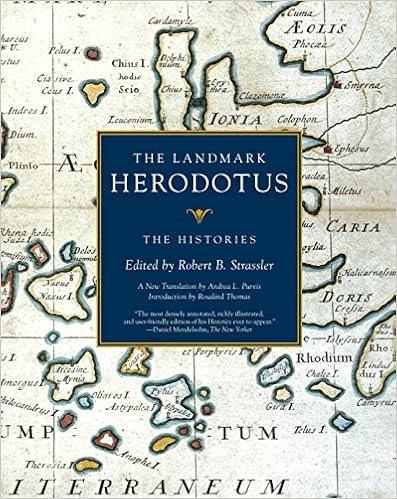
The wars of the past have had impact reverberating down the ages to the present. Patterns of behavior we see today went along then, and that is one of the reasons everyone ought to be familiar with the great men and events of days long past. You can get off to a good start with a well-annotated edition of Classical history, and this edition of Herodotus' Histories (and the two companions suggested to go with it) are good places to start- including if you are a father teaching your children at home.

Especially if you are a father educating your children at home.

Connecting these ancient events to more recent echoes is a thing for another post; suffice here to say that the Athenian expansion into Syracuse and the Persian incursions into Greece are good places to start. (On a related note, do take the time to ensure that your child doesn't mistake Frank Millar/Zack Snyder's 300 for the real events.) As these are meant to hold up over time, and given that the events covered are long gone, if you do your part to take care of these books then you'll be teaching your great-grandchildren with them 50-75 years later.

The entire period that began with Persia's two big invasions of Greece and ended with Alexander's sacking of Persia describes a sequence of events whereby one imperial power, in its hubris, underestimated the resilience of the nation it targetted for conquest. That pair of failed invasions would then lead to the two leading cities each succumbing to the same curse in turn, before a heretofore ignored backwater rose to power, conquered and unified Greece before enacting revenge upon Persia and destroying that empire before itself overextending and collapsing.

That's a pattern that's played out more than once since. (Specific examples I leave to readers to discuss.) These are patterns manifest by means of war, war conducted up close and person by men stabbng and slicing each other to death while avoiding getting smashed by boulders or trampled by beasts. Only recently did we extend that hellscape to include firearms, cannons, and air-dropped bombs. Those men that survived would come home and pass on what they learned--and earned--to their sons, making them ready for when war came yet again.

It is one thing to honor our own veterans. It is another to forget what put them in the field, and by connecting the chains from past to present we can detect the patterns behind them (as well as the men that use them to their benefit and the detriment of common men) so we may forecast the future with reasonable accuracy- and decide what to do accordingly. That this is not done in our schools, save for those in the elite--and to the end, as we learn, of exploiting we common men--is unacceptable; we cannot rely on enemies within to do good for us, so we must--as we did before--do for ourselves.

Saturday, October 10, 2020

The Super Robot As Heroic Icon

The Super Robot, as a concept in fiction, uses the same narrative structure as a superhero. This also means that its roots are the same: mythology. The biggest icon of Super Robots--Mazinger Z--explicitly acknoledges this fact at multiple levels. The name means "Devil God", the catchphrase is "I can be a god or a devil" (refering to the robot's power being subordinate to the pilot's morality), the origin story involves Ancient Greece, several villains are re-imagined gods or monsters (not just Greek), and the 2009 retelling (Shin Mazinger Z: The Impact!) even has Zeus appear as both an ally and a material source of the title robot's power (coupled with the fictional Unobtanium power source, Photo Power).

You see similar use of mythological motifs, themes, etc. with all of the successful and enduring Super Robot properties. It's not just because they were early; Tetsujin 28 was even earlier, but nowhere near the juggernaught status that Mazinger Z attained. No, it's because they embraced the mythological roots and used them to tell as powerful a story as they could. In time, Super Robots attained an iconic status that few Real Robots match- and one of those Reals, the RX-78 Gundam, is a retooled Super design.

The Super Robot is not a prototype for a mass production design. The Super Robot is not a customized machine for an ace pilot. The Super Robot is a heroic icon in its own right, and the pilots that sit in its cockpit are the partners it has in executing its core mission. In this respect, the Super Robot is a technological manifestation of the Iconic Hero and his Core Ethos: Mazinger Z is the premiere warrior defending Mankind from the evil traitor Dr. Hell and his horde of Mechanical Beasts (or later the reborn Mycenian Empire under the Great General of Darkness). Getter Robo is the Champion of Life against all that oppose it and its chosen species: Man. Grendizer is a Superman figure defending Earth from the aliens that destroyed his homeworld. You get the picture.

If you think this would not be willfully wielded for deliberate effect, you would be sadly mistaken. If you then think this cannot be so used for good ends, you're doubly-mistaken.

In the far future of Galactic Christendom, this knowledge was not lost.

The Church, knowing how Mankind thinks, used breakthroughs made in the City of God to make real the fictional Super Robot of pre-Cataclysm popular culture. This was not a thing done out of whole cloth. It was a new form of the same use of iconography and psychology that lead to the early post-Cataclysm efforts to contact survivor communities and begin to knit them back into a greater whole, originally called "Project Gandalf (after the Wizards of Middle-Earth and their mission).

As the Dark Lords revealed their true forms and more of the Nephilim stepped out of the shadows, the pre-Flood abominations also stepped out and the survivors--and later, their children and grand-children--saw things in terms dervived from pre-Cataclysm entertainment: Kaiju, Titans, Mutants, Dragons. It took time for the legendarium of old to reassert itself, and as destruction is swifter than healing the Church had to use the language at hand to deal with the issue.

Giants require giant-slayers. Monsters require monster-slayers. Terrifying monsters require heroic warriors to slay them, and--and this is critical--be seen doing it. Men need to be reminded generation after generation that monsters can be slain by ordinary men because there is a constant flow of new generations that come forth and need to witness this truth to comprehend it. Heroic icons, therefore, have a lawful purpose on multiple levels.

This is why the Super Robots exist, and why they are so powerful: they are the heroic icons that go forth to face the monsters that threaten Mankind.

The breed of men that mount up, get in the cockpit, and go forth must be the very best available and not just in strength of limb, but of heart and soul also. Those men made the difference with the early models of Super Robot, and as the reconquest of Earth turned into the Liberation Crusades that pushed the enemy off-world and then out of the solar system the model for not only the Star Knights but of the various noble houses was made and struck.

The Super Robots would go on to become the icons of noble houses, giving them an anchor for the identity of entire nations. They would define the Church's elite heroes. They would be more than just great war machines, but achieve the full morale-boosting power and narrative weight that their iconic status enabled- and so would those chosen to pilot them.

Friday, April 12, 2019

The Business: When Your Teaser Betrays You

One thing that the teaser for the final Reylo Mouse Wars film makes clear is that we who are out to Fork & Replace Mouse Wars can clearly beat them on the writing front.

Holy shit, that has "Bad Writing" all over it.

The setup with Rey backflipping atop a TIE Silencer, implied to be flown by Kylo, and the ending with a piece of the second Death Star on a planet with the implication that some remnant of Skeevy Sheev dwells within like Yet Another Sith Specter are two giant red flags that this film doesn't take storytelling to entertain an audience first and foremost; it is going to be a secondary concern.

What is the primary concern? Count on the Muh Rey Sue arc reaching its conclusion, with her somehow being retro-actively spliced into the Skywalker line and--as the only Jedi--tasked with making a new Jedi tradition to do what, again inexplicably, neither Luke nor the Prequel Jedi could accomplish. Count on Rey taming Kylo despite him being Emperor in all but name purely because of what she is and not by any effort on her part. Count on Leia, Lando, and the rest being wasted on things that ultimately don't matter. Count on the story being nihilistic and pointless, even if Rey wins and saves the day.

Count on the Star Wars Galaxy, by the end of the film, being one where only Rey matters. As she will embody the whole of the Force, since Kylo's odds on surviving to the credits are slim to none, "The Force Is Female" will indeed be the case for Mouse Wars. Expect Finn and Poe to die or otherwise get permanently sidelined by the end, along with Lando, with only Chewbacca still being up and able due to being a glorified morality pet by Mouse Wars reckoning. In short, this isn't a sincere apology; it's insincere bullshit that's still meant to push an agenda--it's still propaganda--but they're going to lay on the Mea Culpa thick between now and December to sucker people into seeing it.

All they had to do, instead, was write an honest Space Opera. You can still have a heroine lead, and she can still be an action girl, without making propaganda; we had plenty of that in the pulps. (We also had action girl villainesses then, and they weren't mouthpieces either.) But no, the ideologues running Mouse Wars can't have that so here we are- and, being incompetent, they telegraph their intentions without being aware of it. Don't expect better from the trailers to come; expect more tells warning you away. The Mouse doesn't respect you; jump away from Coruscant.

Friday, April 5, 2019

"Literary Merit" Is Bullshit

The embarrassment of tradpub Science Fiction authors, as a class, for their field is revealing when talking about what they consider "early SF". Jim Fear nails it, taken from his Twitter posts of yesterday.

Frankenstein only gets grandfathered into Scifi because it's a philosophy book dressed up as fiction and it's taken seriously by the Literati, which is what Scifi wishes it was because it thinks boring shit like The Scarlet Letter is "grown up".

Scifi Authors are just trying to graft Mary Shelley into their thing because she's taken seriously by Literary Fiction Teachers and the Scifi Authors really, *really* wish that LitFic-senpai didn't think of them like a filthy fucking tramp who dresses like a whore.

Noticing that tendency was a tell of a certain too-common male psychology pattern, I took that ball and ran with it.

That's because they're fucktard cowards who don't get that wealth = power. Either you use the wealth to buy the power, or you use your power to get the wealth; the routes vary, but the destination is the same.

These fuckers are scared to take EITHER route.

Instead they simper like the gamma faggots they are, trying to ride coattails to the destination whereupon they somehow assume both Because Vrry Smrt and get all the winning forever like some retarded Hollywood movie.

That's what all this Muh Literary Merit bullshit really is: childish simpering because they either can't or won't do what is required to succeed as writers of fiction, namely to entertain the fucking audience as best you can. That's why the pulps were, and remain, superior SF.

The fundamental lie is this: the refusal to accept Edgar Rice Burroughs' A Princess of Mars not only as Science Fiction, but as the seminal example of it.

The original cover to A Princess Of Mars.

Exposing this bullshit is part-and-parcel to the reclaimation of the field from the frauds that stole it nearly a century ago. It's Fear Of A Pulp Planet, and they desperately hope that it cannot be stopped. Sure, and the Death Star was invincible. We all know how that ended, don't we?

Fiction is about entertainment, first and foremost. The quality of entertainment, in an honest market, is proven by continuing sales year over year. The old pulps still sell like hotcakes and continues to influence authors around the world. SJW garbage rots on the shelves, when it gets there at all. The real Science Fiction, therefore, comes from the pulps- even later darlings like Dune have that influence and it shows. Appealing to lit-snobs is a pointless waste of time, especially since they haven't mattered for about as long as the commie faggots who destroyed the pulps--in part to get their approval, being fellow travelers--have held the field.

Saturday, November 17, 2018

We Keep A Bedside Notepad For A Reason

I had a thought late last night while doing something else regarding a plot thread for Book Three. It regards one of the major villains introduced in Reavers, whose plot arc comes to its end in Book Three (but gets set up in Reavers). Once I wrote down what the full scheme for this character's end was, in High Concept format, what struck me wasn't that I squared a circle but what I was doing when I had the thought.

I was watching a video by one of my regular Blizzard people ranting about Diablo Immortal and the scummy business model Netease uses for its games, so I was doing something completely different. This was one of those Out Of Left Field things.

I'm used to this. I expect a lot of writers are. For some reason shifting one's apparent attention to something unrelated to a question or problem frees up any blocks in the process and produces useful solutions on a reliable basis. Details for this plot thread need to be worked out, but as it's two books from now I'm safe in just putting this on a 3x5 card (so to speak) and filing it away until I get to that point. Until then, I just need to ensure that what leads to it properly sets the expectation that this result pays off.

And more such things I expect will occur as I write #StarKnight. Another that's already occurred? That I may well have a spin-off of the main sequence featuring the many battles and campaigns where Our Heroes either aren't present, or they are but the events proper are not the focus, in a relationship akin to The Clone Wars has to the Prequel Trilogy.

More to come.

Friday, May 4, 2018

World-Building: The Importance of Memory to Culture & Civilization

A world-building note for today: "Ancient History" can be as recent as five years ago.

I'm talking about living memory, the sort of commonly-held information in a generational cohort of a community people take for granted. For you who routinely write in cultures other than your own, or set at times other than your epoch, you've already gotten a far larger body of such knowledge set off with caveats of some sort so it's not hard to see how common knowledge changes over time.

Because that knowledge resides in the living as an emergent phenomenon (which institutions are meant to emulate by storing such lore somehow via artifice), it is fragile as glass. Have you ever seen people emerge from cults who grew up in them, and then had to unlearn what they learned in the cult? This is the same sort of thing; your setting's "ancient knowledge" is only what your culture keeps alive, by whatever means.

A lot of institutions arise out of the need to store, transmit, and retain fidelity of information over a generational basis. A lot of plot twists in myth and literature revolve around recovering, restoring, transmitting, such information- including the subversion of expectation that what those institutions tell you as a child is true.

Post-apocalypse scenarios in particular have to engage in this at some level to make the story hold up under the weight of the narrative demands put to it, as you're having to deal with things like "How do they make gasoline?" and "Where are they getting the means to do basic field medicine?"- both of which is Ancient History in such a scenario, even if the apocalypse happened just recently enough for an infant to age into someone able to do useful labor (which isn't "be an adult" necessarily).

And that isn't absolute; The Last of Us is an apocalypse scenario where you can see how recent the demarcation line actually is between "Ancient History" and "Common Knowledge", with Ellie being the one severed from the past despite being alive at the end of Civilization.

So, for all you dealing in situations far in the future, or the past, a secret world with its secret history (e.g. as posited by the Ancient Aliens crowd), or a secondary world with its own sense of history, keep in mind that what is commonly believed to be true--common knowledge and Ancient History alike--is shaped by the presence or lack of the institutions that act as a culture's external memory (and individuals capable of accessing and retrieving that information).

A culture with no archives, no preservers, no myth-keepers, no ritual retellings of the culture's core stories explaining itself to itself, no art or architecture, or religion is a culture with no memory beyond what those alive possesses and shares. A culture that is among such, but has no one able to get what information such institutions possess and pass it on to those now alive, is a culture that is on the decline and swiftly facing degradation into primitive savagery.

And yes, you'll see some of this applied in my Galactic Christendom tales (or the post-apocalyptic Wars of the Damned that precedes that era).

Friday, April 20, 2018

When The Unexpected Happens

As I write this post, I'm working on "The Taking of Gabriella Robin". Recently I hit upon something that writers encounter sooner or later in their work: the Unexpected Event. You've likely heard of these things before, where some writer talks about how they got into a fix or know that the story's got an issue and suddenly a character steps up and says or does something that resolves the issue so the narrative continues.

That happened to me, again. In putting this story together, I recalled that I need to address a problem with my master villain; it does not help to make him seem unconvincingly potent, as a sort of villainous Gary Stu, for the same reason that heroic Stus and Sues routinely wreck stories where they are present. So when I hit on a snag at the conclusion of Act One, the master villain stepped out and took a big risk to cut through that snag like the proverbial Gordian Knot.

I can only get this specific without spoiling things: he intervenes, in a deniable fashion, to stop the hero from rescuing the damsel at a critical moment at Act One's climax. The damsel is the only one who clearly witnesses the master villain's treachery, as she is in the only position to see the deed done at all, after which she's stolen away and cannot gainsay the villain's statement on the matter.

This has had cascading consequences. Now the master villain needs to cover up his actions, which will drive him to escalate his plans and pressure his henchmen accordingly, and it opens up an option I hadn't considered previously for advancing the plot to that satisfying conclusion I know the reader wants. As Bob Ross would say, it's a happy accident, and I am grateful for it. I'm liking how this unexpected change is turning out, and I think you will too when I'm done. No Pulp Speedster am I, yet, but it will be done.

Friday, April 6, 2018

On Inspiration and How To Use It

Over at the Retreat, I wrote a post in praise of Sabaton's cover of Manowar's "Kingdom Come". I said I would follow up here.

Here we are.

For my part, listening to that song gave me the idea to structure the series I have in my head. The serial here, and Taking, are early episodes to set up the big action and give the master villain his establishment via the deeds of subordinates. In short, a big plot needs big build-up, and that's best done by making it the subplot in a series of adventures meant to tie events together.

Well, one thing leads to another.

Which leads to something more concrete. While Crisis is me shaking things down prior to the big production, so I'm not that worried about making mistakes, Taking is where I'm going in with a clear plan. Thanks to that Sabaton cover, I've gotten that plan, and it began coming together when I listened to the soundtrack to one of my favorite movies.

Because when you hear that you feel goddamn invincible, fires of passion fueling your fighting spirit and driving you to go rescue the damsel and put right what's gone wrong. For the sort of story Taking is about, you need to find whatever means you can garner to bring that mood into your brain when writing the keen points so that you use the right words in the right way to get the desired effect across to the reader. That is the lawful function of inspiration It's not called a "Muse" for nothing.

Speaking of which, this entire soundtrack is also key for me to hit the right tone:

The point to inspiration is not just to have breakthrough moments on dealing with the work of narrative construction, but also to give you a direction to follow when it's time to put in the perspiration required to actually get the job done. That direction then tells you what to prepare to do, and how to go about doing it; it fills in the context between "Idea!" and "Complete Manuscript!" that so many writers require- and the Usual Suspects routinely failed to deliver, playing their part in the creation of the Pink Slime Problem killing Tradpub.

Friday, November 17, 2017

Making the Setting: The Villains of the Piece (Part Four)

This week we're descending from meta-narrative to narrative. Of those two mastermind-level villains I described previously, I'm putting work in on Red Eyes, so I'm writing a story about space pirates. As Red Eyes is the Pirate Admiral, his chief henchmen are going to be his subordinates and staff. At this point< i have a choice to make, which is to decide on the scale of Red Eyes' fleet. It's quite tempting to go with something small, as that's a clear historical parallel, but equally tempting is to go large- very large, such that Red Eyes' immediate subordinates are Admirals themselves.

I'll let you find out what choice I made when the story is ready for purchase, but for now it's time to get down to more immediate narrative concerns.

The reader demands that you capture his attention right away, which is why you ought to start your story as close to the Inciting Incident as it gets. For this tale, I'm starting with a pirate attack that targets our Space Princess for abduction. Our pirate leader is one of the more colorful crooks in the fleet: Dashing Jack. This is one of my double-meaning names, as he's both charismatic and fleet of foot, but nonetheless a thoroughly despicable cad.

Everything about this opening sequence is open for use in establishing Jack as the antagonist, as well as displaying Red Eyes as the greater threat behind him. Exactly what ruse is used, how it is used, and those executing the attack are important characterization details. A brutal, bloody-minded pirate uses intimidation to demoralize targets prior to straight-forward assaults that pound targets into submission. Then get on with plundering the prize and butchering those he cannot justify as booty.

Jack isn't that. Jack prides himself on deceiving his targets, and then taunting them when his cunning gets what he wants before they can do anything about it. From women to warfare, he's all about showing off how clever he is to display his superiority; he's with Red Eyes because the notorious barbarian see Jack as akin to himself- a superior man, entitled to take what he wants because he can.

(And yes, Dashing Jack will be wearing a mask.)

When using a lesser villain, remember that he has to reflect whom he's the stand-in for in some manner. Readers will expect it, so make that expectation work for you. Jack's mask will have red eye lenses, and that's just the most obvious reflections of being a man under Red Eyes' banner. Key words and phrases, operational habits, attire, and more are all there to show symbolically how Jack is the stand-in for Red Eyes in this story. The question I need to answer is "What aspect of Red Eyes does Jack represent most?", and you will have to wait for that answer also.

That about does it here. Leave questions below and I'll get to them as I can. Next week will be something different.

Friday, October 27, 2017

Making the Setting: The Villains of the Piece (Part One)

This post follows on from this post I did a few weeks ago. Since that post, there's been one change worthy of noting here: the agreed-upon title is "Archduke", not "Duke"; the former is for the head of the house, while the latter is for the heads of the vassal families immediately under him as well as that of the heir apparent.

There's a thread running through this setting from the ancient past to the far future: the consequences of Genesis 6. The angels that went AWOL on God because the local women were too hot to resist never repented of their errors. Instead, they lied about it, doubled-down, and projected their failings on to others. In the time immediately before the Coming of the Azure Flames, these angels returned to the world and renewed the very activities that got them imprisoned in the first place. It is due to their actions that an otherwise flawless plan by the other notable bunch of fallen angels to do their Pinky & The Brain impression failed so dramatically and unleashed the worst of the Nephilim--the demon Legion--upon the world (in the form of a zombie apocalypse). (Lew's not happy about that.)

During these times, some peoples took the promises of false gods and other saviors and escaped certain death in exchange for loyal service; many of these were also of that same bunch of fallen angels, playing those roles, aiming to establish herds of their own to play with as they wish. The more far-sighted and capable of them took their herds off-world, establishing Conveniently Human Aliens for Mankind to encounter once Earth got sorted and going to the stars once more became a viable course of action.

What does this do?

  • A single point of origin for Evil.
  • A single point of origin for "non-humans": they're corrupted Men. (Hybrids, if you will.)
  • A believable explanation for other setting elements: a lack of AI (too easily possessed, as they are soulless egos), why undeath is a bad thing (it's not really you, but a specific demon running your body like a corpse-puppet; think like you're playing one in a game), Full-Conversion Cyborgs require the blessing of the Church (too close to death), a taboo on the use of Weapons of Mass Destruction (part practical and part dogma; irradiated land can't be settled, and "Steward of Creation" dogma applied on the stellar scale)
  • A Big Bad you can punch in the face, good and hard, like Superman can do to Darkseid. Even if you can't truly destroy them, you can beat the crap out of them and put them down for a long time. (And I haven't decided if true death is beyond a protagonist to do or not, yet; this is just for necessary reader morale purposes.) If Tolkien can do this with Morgoth and Sauron, I can do this sort of thing too.

The fundamental thread here is that of violating taboos in the name of some seaming good because the consequences cannot be seen, or if seen then accepted. Fear, pride, envy- all common elements in tales where these guys have a presence, even when not literally present. Same as it ever was, but concrete in forms that the Fall From Eden is not to a lot of people. From here, we can branch off into other themes and motifs.

Thursday, September 7, 2017

"On The Books" Talks Dragon Awards & Indie Publishing

The Dragon Awards got announced and handed out last weekend at Dragon Con. While previous winner Brian Niemeier didn't win again this year, he's hardly broken up about it, and explains why here. He spent this week's episode of Geek Gab: On The Books talking about that with another nominee: Daniel Humphreys, author of A Place Outside the Wild. Settle in and take a listen over your lunch break.

If there is one consistent theme to a lot of Brian's posts at his blog, and his episodes of this podcast, is that the old model that the Big 5 and their London counterparts built into massive corporate empires is not only decaying, it's collapsing and there is no future in it for most authors- no matter if they have a contract or not.

Furthermore, the attempt by the SJWs dominating SF/F publishing to control the narrative concerning their control through the Hugos is also collapsing. The Dragons' second year makes it crystal clear that the Hugos are not relevant, do not give voice to the fans, and has no business purporting itself to be a marker of quality. The fans came out big for the Dragons this year, and they will come out even bigger next year. The SJWs can't get more than half of the votes in a single Dragon's category to vote at all; they're done, and the smarter ones know it.

The business is changing, and the fact is now becoming obvious to the unobservant. Time to seize the future for ourselves.

Friday, September 1, 2017

The Craft: Characters Are Tools. Handle Them Accordingly.

Over at the main blog, I posted a follow-on to Razorfist's last video for Mad Max Month. I hit upon my chief objection, which is that George Millar lied to me. He sold a Mad Max story, where the story itself just had Max in its as some extraneous character that has no justification for being there at all (in narrative terms). This is a tell of fan fiction.

And, as much as folks want to believe otherwise, "fan fiction" is synonymous with "bad writing" for a reason. One of them is the insertion of characters that cannot justify their presence in the story's narrative, and that's what happened here.

Writing is a craft because there are such things as Best Practices. It is a body of knowledge that accumulates over time, can be learned, can be mastered, and improved upon by those masters. Best Practices arise through the repeated trials, errors, and successes that previous generations attempt and observe. They are passed on because they reliably, repeatedly, work; you might as well argue that gravity isn't real.

Which means that characters are tools, just like every other element of the writing craft, and as such you use only those characters that are required to execute the narrative properly. Surplus elements get the chop. Editing identify them, and revision culls them. Your characters are there to do things, and once their job is done you need to hustle them off the stage because they have no further authorization to be present in the narrative. You know this is true because you've seen, first-hand, what it looks like when a story doesn't do this.

That's why editors are are useful. Engage one if you are able to do so. Brian Niemeier's post today at Kairos addresses this very matter. Listen to them, learn from them; one of the most reliable ways to improve your craft is to heed your editor's reasons for revision. If you want to do more than dabble--if you want your writing to pay bills--then heed this and master your craft. Cut the fat, and that includes characters you do not need, and prosper.

Friday, August 18, 2017

Razorfist Presents a Storytelling Masterclass

Learning how to tell a story isn't as easy as it looks once you go from "Dude talking about his fishing trip." to "Entertaining people as a means of making a living." While I--like many of you reading this--deal in the written word (short stories, novels, etc.) we are unwise to not pay attention to other storytelling media.

Today, as part of a month-long retrospective on the franchise, Razorfist revisits the most meme-worthy entry of the Mad Max series: Mad Max: Beyond Thunderdome.

For a writer of fiction, the reason to study film, television and comics as storytelling media is to see and hear what good storytelling looks and sounds like. You'll pick up characterization, pacing, plot construction, narrative threading, etc. faster by putting that analytical eye to more than the written word- and you'll be ready to learn how to write scripts for them in doing so. (You do want more means to make money by writing, right?)

You'll also see how to make an entertaining critical review, something Razorfist is competent--approaching mastery--at doing. Use of language, sentence structure and phrasing, use of emphasis for effect, and so on are all things you can--and should--learn from watching Razorfist's videos. That's incredible value for your time spent watching them, so if you're still learning you will benefit from doing so; if you're already up to speed you can still benefit by seeing how his style can inform yours, something that can only make you better.

So don't just read. Watch. Listen. This is not a world of pure written media anymore, despite what some writers want to believe. Learn from the storytellers in all media if you want to write as well as your talent allows.

Friday, August 4, 2017

On The Books Does Pulp Speed, The Dragons Final Ballot Is Live, and Story Fragments

First, Brian Niemeier had a great episode of "On The Books" talking with Name about "Pulp Speed". Less than 30 minutes, so give it a listen over your break(s), and take in the conversation.

Second, the final ballot of the Dragon Awards are out. Brian, Declan Finn, John C. Wright, Jon Arroz, and several others previously on either Geek Gab Prime or On The Books made the final ballot in one or more categories. Congratulations, and good luck on winning your category. The final results will be announced at DragonCon, so you won't have to wait long.

Friday, July 7, 2017

Geek Gab's "On The Books" Nails It Again

Brian Niemeier's mid-week show on the growing Geek Gab podcast network nailed it again with this week's show. (You are subscribed to the Geek Gab channel, somehow, right? You should be!) This week he talks with Jon Del Arroz about Jon's new novel, For Steam and Country, and the inevitable necessity for authors to be competent businessmen- especially as indie authors.

It's unfortunate that YouTube doesn't do Chat Replay. As usual for a Geek Gab show, the live chat is a value-added experience that the show itself cannot possibly take full advantage of for later listeners. I encourage you to, if you can, make it when the show is live (until such time as Chat Replay is a thing). The chat conversations are often as good as one's going on in the show itself.